SUP Rail Saver Size Guide: Clear vs Jumbo vs Xtreme vs RaceMaster
Carles CarreraIf you are comparing RSPro rail savers, start with the part of the board your paddle actually hits. Board length helps, but rail height, rail shape and the way you paddle matter just as much.
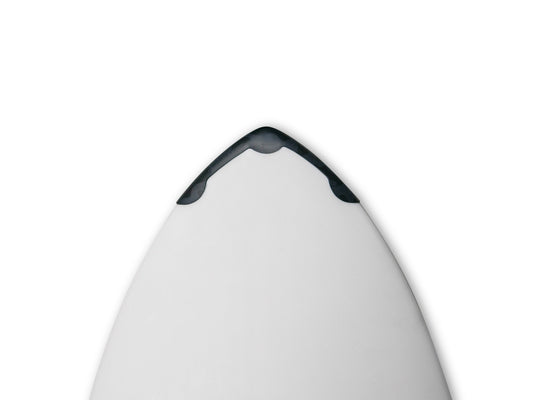
Short answer: choose Xtreme for shorter SUP surf boards, Clear for standard rails, Jumbo for larger boards with more exposed rail, and RaceMaster for long race boards with tall, boxy rails.

Do not choose a rail saver by board length alone
Length is a useful first filter, but it does not tell the whole story. Before choosing, look at:
- Rail height: a tall rail needs more vertical coverage.
- Rail shape: boxy race rails need a different fit from a rounded surf SUP rail.
- Where your paddle lands: protect the section that receives repeated contact.
- How you use the board: surfing, training, racing and touring create different impact patterns.
The goal is not to cover the board with unnecessary material. The goal is to protect the rail before small repeated hits become visible damage.
SUP rail saver size guide
Use this chart as a starting point, then confirm the rail shape and your normal paddle contact area.

| Rail saver | Good starting point | Best suited to |
|---|---|---|
| Xtreme | Boards under about 8 feet | Short SUP surf boards and concentrated impact zones |
| Clear | About 7'8" to 11 feet | Standard hard SUP rails and everyday paddle protection |
| Jumbo | About 11 to 12'6" | Larger boards, touring boards and rails that need more coverage |
| RaceMaster | Long race boards, especially 12'6" and above | Tall, boxy SUP race rails |
These ranges overlap because boards are not built to one universal shape. If your board sits between two options, compare the rail profile before choosing the shorter or narrower saver.
Compare the four RSPro options

Xtreme
Shorter protection for compact SUP surf boards where the rail takes repeated paddle hits.
View Xtreme
Clear
The standard-size starting point for most hard SUP boards with conventional rails.
View Clear RSPro

When to choose Xtreme
Xtreme is made for shorter SUP surf boards, usually under about 8 feet. These boards are compact and manoeuvrable, but their rails often sit close to the paddle during hard strokes and wave manoeuvres.
Choose Xtreme when you need focused protection around a high-risk section rather than a longer saver designed for a bigger board.
When to choose Clear
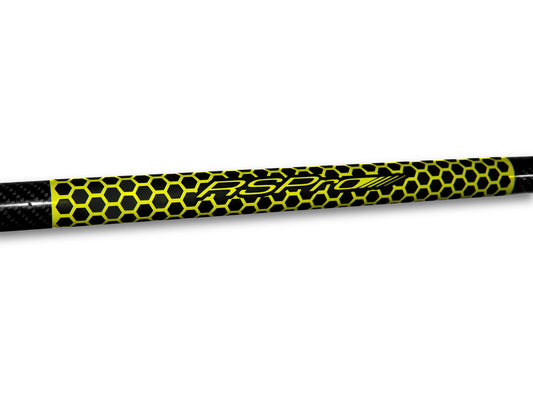
Clear is the best starting point for most standard-size hard SUP rails. It measures 191 × 6.3 cm and is designed for the conventional rail profile found on many surf, all-round and performance SUP boards.
Choose Clear when your board is roughly 7'8" to 11 feet, the rail is not unusually tall or boxy, and you want transparent protection that stays visually quiet on the board.
When to choose Jumbo
Jumbo gives larger boards more coverage. It measures 210 × 8.9 cm and is a better fit when a standard rail saver would leave too much of the impact zone exposed.
Choose Jumbo for larger all-round and touring boards, rescue boards, downwind boards and other boards with more rail surface around the paddle contact area.
When to choose RaceMaster
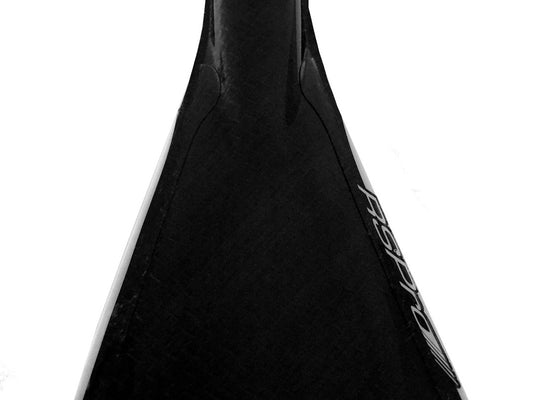
RaceMaster is designed for modern SUP race boards with tall, boxy rails. A standard rail saver can fit the length of a race board and still leave the upper rail exposed. RaceMaster is shaped for that taller profile.
Choose RaceMaster when your board is a long race design, especially 12'6" or longer, and the rail rises noticeably higher than a conventional SUP rail.
Why rail protection matters
Most rail damage does not come from one spectacular crash. It comes from repeated paddle contact, transport and handling. Lightweight performance boards are built to move efficiently, which leaves less material between the paddle and the board's finish.
Rail protection is not about being afraid to use your board. It is about taking the repeated impact before the finish, rail edge and resale value take it instead.
If your board sits between two options
- Look at the rail profile. Tall and boxy usually means you need more coverage.
- Find the real impact zone. Hold your paddle normally and notice where the blade and shaft pass the rail.
- Choose coverage before decoration. A product that fits the rail is more useful than a pattern that only looks right.
- Check the product dimensions. Compare the listed length and width with the section you need to protect.
Installation tips
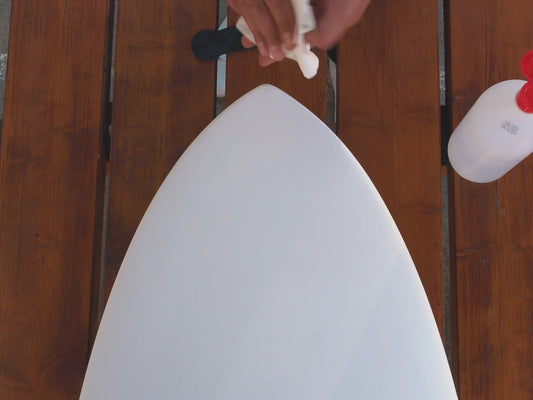
Measure and offer up the rail saver before removing the backing. Clean the rail thoroughly, work at a sensible room temperature and press the adhesive down progressively. Allow the adhesive to bond before paddling.
See the RSPro installation instructions and compare the dry and wet installation methods before you begin.
Frequently asked questions
Is board length the only thing that matters?
No. Board length is a useful first filter, but rail height, rail shape and the position of your paddle contact are equally important.
Can I use Clear on a race board?
You can if the rail is a conventional height and shape. If the race board has a tall, boxy rail, RaceMaster is the safer fit because it is designed to cover more of that profile.
Are RSPro rail savers for inflatable SUP boards?
RSPro rail savers are designed for hard boards. Inflatable boards use a different construction and do not have the same rigid rail surface.
Do I need rail protection if I only paddle on flat water?
Flat water does not remove paddle contact. If you paddle regularly, repeated small strikes can still mark the rail. Protection is especially sensible on light or expensive boards.
Choose protection before the damage becomes visible
The right rail saver is the one that matches your board's rail and the way you use it. Xtreme, Clear, Jumbo and RaceMaster cover different problems, so you do not need to guess from the product name alone.
Explore the full RSPro SUP rail protection collection
For the wider question of whether rail protection is worth it, read Do You Really Need Rail Protection on a SUP?